.avif)
.avif)

Great demos aren't product tours
Somewhere between discovery and the demo, many presentations turn into product tours. Reps click through menus, explain every workflow, and showcase capabilities that have little to do with why the buyer booked the meeting in the first place. The conversation shifts away from the customer and toward the software.
A demo isn't an onboarding session nor a product training course. It's the moment a prospect decides whether your solution fits their business. They don't need to understand every niche. Instead, provide a narrative that helps them visualize the impact of your product on their specific challenges.
The highest-converting demo decks follow a clear narrative instead of a feature checklist. Every section has a purpose, and every slide moves the story forward.
AI makes consistency easier to scale. Teams can create reusable prompts, templates, and workflows that preserve the structure while tailoring each presentation to an individual prospect. AI removes repetitive work so reps can spend more time preparing meaningful conversations and less time rearranging slides.
Start with the customer's story—not yours
The strongest demo decks begin long before the product appears on screen. Instead of opening your company history or a feature overview, start with what you've learned about the customer. Who are they? What pressures are they facing? What happens if nothing changes? These questions create the foundation for the rest of the presentation.
Every buyer operates within a unique business environment. Demonstrating that you understand those realities builds credibility before you've presented a single feature. This is also where AI can become a valuable research partner.
Instead of spending hours organizing notes from discovery calls, reviewing company announcements, and scanning industry reports, sales reps can use AI to synthesize that information into clear themes. AI can identify recurring pain points, summarize research, and even help draft customer-specific messaging that still sounds natural after it's been reviewed and refined by the rep.
Prove you can solve their problem
Once you've established customer context, define the problem clearly. Avoid vague statements that could apply to any organization. Instead, connect the challenge directly to what you've learned during discovery. Then it’s time to raise the stakes. What happens if the problem continues?
Only after the customer understands the cost of maintaining the status quo should your product enter the conversation. At that point, the transition feels natural because you've established why change matters before introducing how it happens.
Show the solution through outcomes, not features
Once you've established the customer's challenge, it's finally time to introduce your product. But resist the temptation to launch into a feature-by-feature walkthrough. Your prospect doesn't care that Feature A sits next to Feature B inside your navigation menu. They care whether those features solve the problems you've just discussed.
Every feature shown should answer one question: Why does this matter for this customer?
Instead of demonstrating everything your platform can do, focus only on the workflows most relevant to that buyer. If they're evaluating your solution to improve sales enablement, spend your time there. Leave unrelated capabilities for future conversations. This approach keeps demos focused while respecting your prospect's time.
Once your team has established a repeatable demo framework, AI can help adapt examples, adjust messaging for different industries, summarize prospect research, and recommend relevant workflows without requiring every rep to rebuild an entire deck.
Beautiful.ai supports this same balance between consistency and flexibility. Teams can build reusable templates with Smart Slides while allowing individual reps to customize examples, visuals, and messaging for each prospect. Reps can begin with a proven narrative and spend their energy tailoring it to the customer sitting across the table.
Build trust before asking for a decision
By the time your demo reaches the final stretch, your prospect should understand both the problem and your solution. Now they need confidence that choosing your product is the right decision.
Customer stories are often more persuasive than product claims because they come from organizations that faced similar challenges. A short case study or testimonial helps buyers picture what success could look like inside their own business. If you've worked with recognizable brands in their industry, highlight them. If not, focus on a customer with similar goals, team size, or use case.
Many buying decisions stall because prospects can't picture what happens after signing the contract. Briefly walk them through onboarding, training, rollout, and the resources available along the way. Showing a realistic implementation plan removes uncertainty and makes adoption feel achievable.
Whether concerns center on implementation, pricing, security, or change management, acknowledging them openly demonstrates confidence. Buyers know every solution has tradeoffs. They're looking for partners who understand those concerns and can speak to them honestly.
End with momentum geared toward next steps
Too many demos end with an awkward pause. Finish by giving your buyer a clear picture of what happens next and tailor it to the exact next step.
If a trial makes sense, explain what they'll be able to accomplish during that period and what success should look like before the next conversation.
For a pilot, frame it as a focused implementation with a timeline and success criteria. Pilots allow both teams to validate outcomes with a smaller rollout before expanding more broadly.
If you’re going straight to proposal, remove as much ambiguity as possible. Outline what's included, expected timelines, licensing options, and how you'll continue supporting the evaluation process.
Use AI to make demos iterable
The highest-performing sales teams build systems that help every rep deliver a consistently strong experience. Without this repeatable framework, each rep develops their own narrative, builds their own deck, and updates content independently. Over time, messaging drifts, branding becomes inconsistent, and buyers receive very different experiences depending on who they're speaking with.
A shared structure can solve that problem and AI strengthens the system even further.
Instead of beginning with blank slides, reps can start from approved templates, use AI to summarize discovery notes, research prospects, adapt messaging for specific industries, and personalize examples without rebuilding the entire presentation. Human judgment still shapes the conversation. AI simply accelerates the preparation that supports it.
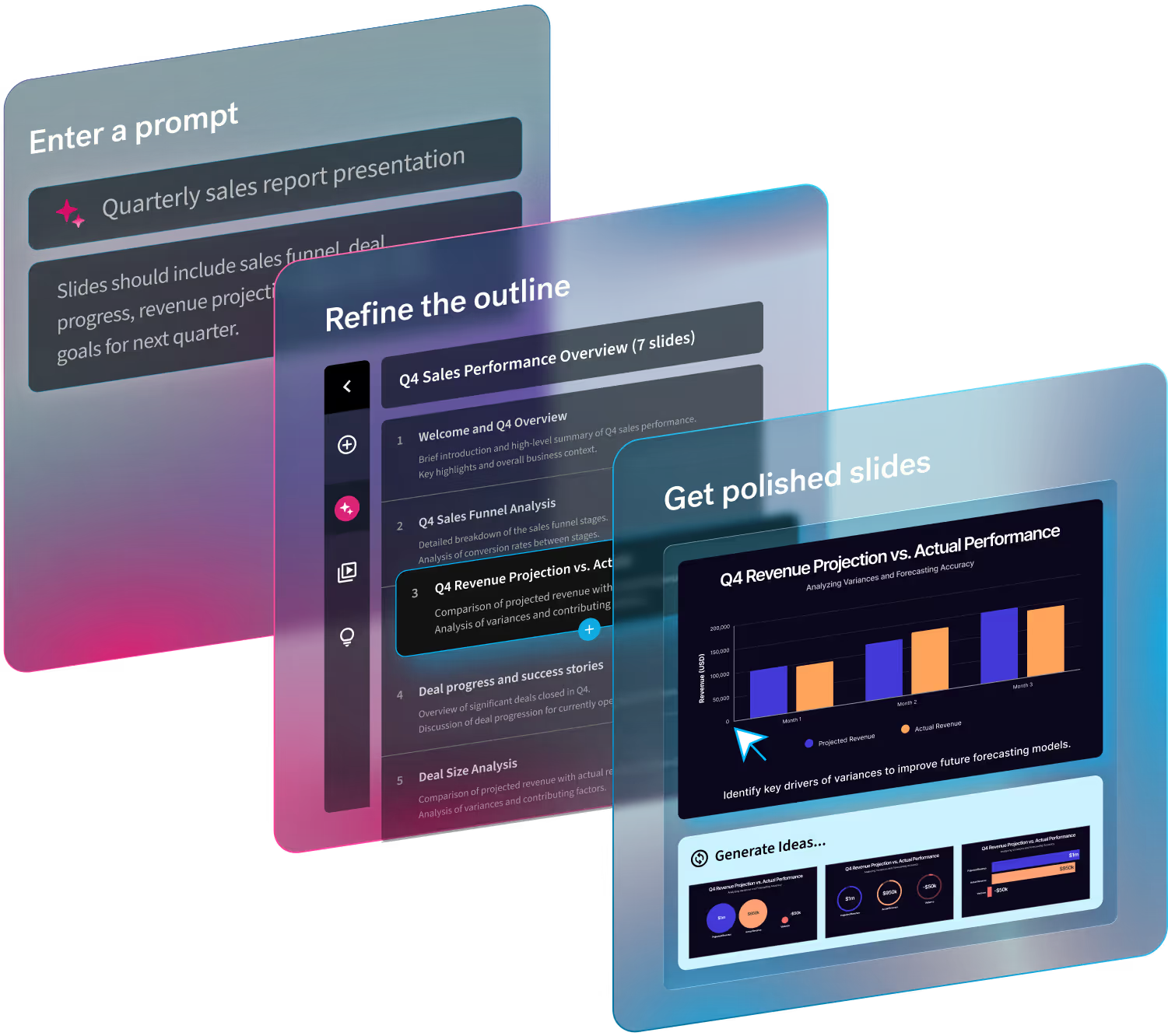
In Beautiful.ai, teams can begin with an outline, existing document, or discovery notes, refine the story first, and let Smart Slides handle the design work automatically. That allows sales reps to focus on understanding buyers and guiding conversations instead of formatting presentations. Individual reps still personalize each deck for the customer in front of them, but they're doing so from a foundation that's already been proven across the organization.
Scale demos with strong narratives
Great demos don't have to rely on individual talent alone. A repeatable framework gives every sales rep a stronger starting point, creates a more consistent buying experience, and produces better coaching opportunities across the team. AI makes that framework easier to personalize at scale by accelerating research, preparation, and content creation without replacing the human expertise that closes deals.
With Beautiful.ai, sales teams can combine repeatable storytelling, AI-assisted workflows, and presentation design that stays polished automatically. The result is a demo deck that's easier to personalize, easier to maintain, and built to help every rep spend less time editing slides and more time building buyer confidence.
Try it now, free for 14 days.

.avif)

.avif)
.gif)