.gif)

Title slides win or lose attention right away
Before you begin speaking, your audience is already reading the room (and your first slide). If it feels plain, crowded, or unclear, they’ll assume the rest of the deck will be the same.
Not because the topic is boring or the audience is impossible to impress, but because the opening slide gives them nothing to grab onto. It’s either a generic title, a dense agenda, or a vague “welcome” slide that makes the audience do the work of figuring out why they should care.
That’s a mistake.
Your opening slide is not a formality. It’s one of your most important moments. In under 60 seconds, it tells your audience whether this presentation is worth their attention or whether they can safely check email until the “real” content starts.
A good presentation doesn’t expect the audience to find the message on their own. It guides them to it. The audience should be able to infer the gist of the content from your first slide. Not the entire argument. Not every supporting detail. But the point. The direction. The reason they should keep listening.
That’s what a strong presentation hook does. It gives people a reason to lean in before they mentally drift somewhere else. Don’t throw away those first few seconds. They can make or break your presentation.
Capitalize on high engagement at the start
The beginning of a presentation is one of the few moments when you naturally have the room’s attention. People are still oriented toward you. They’re waiting to understand where you’re going. They haven’t yet decided whether your deck is useful, predictable, or painful.
Use that window.
Effective presentation psychology relies on capturing attention and maintaining engagement by working with the brain's natural processing limits. The primacy effect suggests people are more likely to remember information they encounter early in a sequence because those first items receive more attention and are more likely to be stored in memory. In presentation terms, your opening doesn’t just introduce the content. It shapes how the rest of the content gets interpreted.
That matters when it comes time to present. Your audience is busy, and they’re filtering for relevance. They want to know: What is this about? Why does it matter? What am I supposed to take away?
A strong opening slide answers those questions quickly.
It establishes context so people aren’t guessing. It creates credibility by signaling that the story is worth listening to. It gives the presenter a clean starting point instead of forcing them to warm up with filler. And it sets expectations for the rest of the deck.
Keep it clear, clean, and engaging
A good opening slide does not need to be clever. It needs to be clear.
The best first slide examples usually have three things in common: one sharp idea, a reason to care, and enough visual restraint to make the message feel intentional.
Start with one clear idea. Your first slide should not try to summarize the entire presentation. It should focus attention on the key takeaway. If the audience has to choose between a headline, subtitle, chart, logo, and five bullets, you’ve already made the slide work too hard. Guide them to the message you want them to hear.
To grab attention, add an emotional or intellectual hook. That hook can be tension, curiosity, urgency, surprise, or ambition. For example: “Your sales deck is costing you deals” or “The next 12 months will decide whether this product scales.” The goal isn’t drama for drama’s sake. It’s relevance.
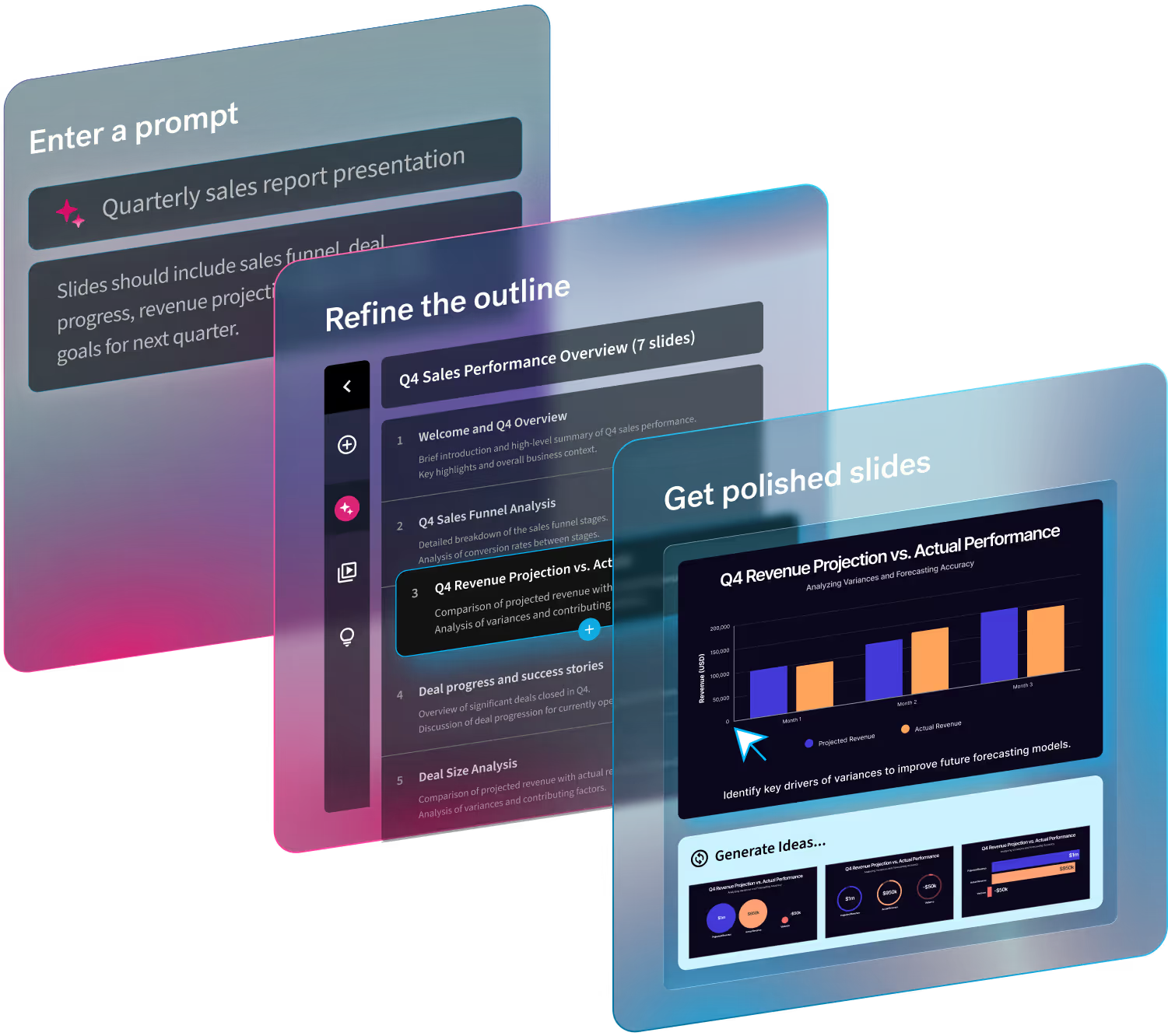
Keep the design visually simple. A clean opening slide feels more confident than a cluttered one. If you’re stuck, use AI as a refinement tool. Use Beautiful.ai to shorten your opening title, make it more direct, or shift the tone from formal to more provocative by selecting a text box and opening the AI editor. You can also use built-in stock images or AI-generated visuals to create a stronger visual mood, as long as the image supports the message instead of decorating the slide.
The first slide is an opportunity, don’t waste it
The first slide should earn attention. Too many decks treat it like administrative paperwork. But you don’t have to let this, or other common presentation mistakes, get in your way.
The worst offender is the agenda-first slide. There are exceptions, but most agendas are not opening slides. Your audience is going to experience the structure as you present it. They don’t need to hear it twice before they understand why it matters. Lead with the point, then orient them if needed.
“About us” openings are another common miss. If the audience already knows you, the slide is redundant. If they don’t, you can give a short verbal introduction. Either way, using your most valuable slide to explain who you are is usually less compelling than showing why the conversation matters.
Overcrowded slides are just as damaging. If your audience is forced to process too much information at once, they’ll stop listening and start scanning. That is not engagement. That is survival. The opening slide should simplify the room’s job, not create more work.
Weak titles are the quieter problem. A title like “Market Trends” or “Customer Research” technically describes the content, but it does not deliver a takeaway. Strong titles lead. They tell the audience what to notice. They make the slide useful before you explain it.
The good news? For as many ways as the opening slide can go wrong, there are plenty of ways it can go right. The trick is tailoring the slide to the story you’re telling.
Winning frameworks for your opening slide
There isn’t one perfect way to open a presentation. The right presentation hook depends on your audience, topic, and goal. But these frameworks are reliable starting points when you’re thinking about how to start a presentation with more impact.
The bold statement
A bold statement works because it gives the audience a clear point of view right away. Instead of opening with: “Q3 Marketing Performance Review”
Try: “Q3 proved our pipeline problem is not a traffic problem.”
That title does more than label the topic. It tells the audience what to listen for and creates tension. It immediately frames the presentation around an insight, not a report.
Use this example when you have a strong argument, recommendation, or point of view. It works especially well for executive updates, strategy decks, performance reviews, and consulting presentations.
The provocative question
A provocative question creates curiosity because it makes the audience mentally answer before you begin. Instead of: “Customer Retention Strategy”
Try: “What if our churn problem starts before customers ever use the product?”
That question points to a deeper issue and gives the presenter a reason to move into the story.
This is a strong option when your presentation is about reframing a problem. It works well for product, marketing, customer success, and sales teams trying to shift how stakeholders think.
The surprising data point
A data-led approach works when the number is specific, relevant, and immediately meaningful. Instead of: “Sales Pipeline Update”
Try: “42% of late-stage deals are stalling for the same reason.”
The number gives the audience something concrete to react to. But the slide should not dump data. One number is enough. The presenter can explain the context next.
This is one of the strongest first slide examples for analytical audiences, board meetings, research readouts, and performance reviews. Data storytelling is becoming an essential part of business communications. For more on turning numbers into actionable data, you can read more here.
The relatable scenario
A scenario works because it puts the audience inside the problem. Instead of: “Improving Sales Enablement”
Try: “Your rep has 10 minutes before the call. Which deck do they use?”
That opening feels immediate. It turns an abstract business issue into a recognizable moment. The audience can picture the problem, which makes the rest of the presentation easier to follow.
Use this framework when you’re presenting a workflow problem, customer pain point, employee experience, or buyer journey. It’s especially useful when your audience needs to feel the friction before they’ll care about the solution.
The big idea
A vision-led opening shows where the presentation is going and why it matters. Instead of: “2026 Product Roadmap”
Try: “We’re moving from feature delivery to platform leadership.”
This type of opening works because it gives the audience a strategic frame. It signals ambition and direction before getting into the details.
Use it for founder decks, company updates, product strategy, annual planning, and presentations where the goal is alignment around a bigger idea.
How to gauge if your slide is working
The easiest way to test your opening slide is to look at it like someone who has no context:
- Can it be understood in 3 seconds?
That does not mean the whole presentation should be obvious. It means the audience should immediately know what kind of conversation they’re entering.
- Does it create curiosity or tension?
A good opening slide makes people want the next sentence. It raises a question, surfaces a problem, challenges an assumption, or hints at a useful insight.
- Is there only one message?
If the slide has three competing ideas, it has no real center. Cut until the main point is unmistakable.
- Would someone want to hear the next sentence?
This is the most honest test. If the slide doesn’t create a natural next step for the presenter, it probably isn’t a hook. It’s a label.
When in doubt, simplify. Make the headline more specific. Remove secondary copy. Swap a decorative visual for one that adds meaning. Or use a tool like Beautiful.ai to test cleaner Smart Slide layouts and quickly compare which version makes the point fastest.
Reprioritize your opening slide
Learning how to start a presentation well is not about adding theatrics. It’s about respecting attention.
The opening slide sets everything in motion. It tells your audience what to expect, gives them a reason to care, and shapes how they’ll listen to everything that follows. Before your next presentation, don’t treat the first slide like a formality. Pressure-test it. Can it live up to the checklist in this article? Does it fall into one of the common opening slide mistakes?
If not, sharpen the message before you build the rest of the deck. Beautiful.ai can help you turn that first idea into a clear, polished opening slide faster, so your presentation starts with momentum instead of warm-up.
Try Beautiful.ai today and create an opening slide that gives your audience a reason to lean in.

.avif)


.avif)