.avif)

If you’ve ever paused mid-presentation to ask yourself, “Is this a pitch deck or a sales deck?”, you’re in good company.
The two are often lumped together, reused interchangeably, or treated like different flavors of the same thing. In reality, a sales deck and a pitch deck serve very different purposes. They’re created for different audiences, used at different moments, and designed to drive very different decisions.
Understanding the difference doesn’t just make your decks better, it makes them work harder for you.
It starts with intent
The simplest way to think about it is this: a pitch deck is about belief, while a sales deck is about commitment.
A pitch deck is used when you’re asking someone to buy into an idea. A sales deck is used when you’re asking someone to buy a solution.
That difference shapes everything that follows.
What a pitch deck is really for
A pitch deck is most often used early in a relationship. You might be pitching investors, potential partners, or internal stakeholders. In these moments, no one is ready to make a purchase—they’re deciding whether your vision is worth paying attention to.
Because of that, pitch decks are high-level and story-driven. They focus on the why before the how. The goal is to clearly articulate the problem you’re solving, why it matters right now, and why your team is uniquely positioned to solve it.
Rather than diving deep into features or workflows, a pitch deck paints a bigger picture. It introduces the opportunity, establishes credibility, and leaves the audience thinking, “This is something I want to be part of.”
Pitch decks are usually concise, forward-looking, and intentionally light on details. They’re meant to spark interest, not answer every possible question.
What a sales deck is designed to do
A sales deck comes into play much later. At this point, the audience already understands the problem. Now they’re evaluating options and deciding whether you are the right one.
Sales decks are grounded, specific, and buyer-focused. Instead of telling a big-picture story about the future, they zoom in on the present: how your product works, how it fits into a customer’s world, and why it’s better than the alternatives.
A good sales deck anticipates skepticism. It shows real use cases, real outcomes, and real proof. It connects features to tangible benefits and helps the buyer feel confident that choosing you is the safest, smartest move.
Compared to pitch decks, sales decks tend to be more detailed and more tailored to the audience. The goal isn’t inspiration, it’s clarity.
Why mixing them up causes problems
Because both decks live in slides, it’s tempting to think one can do double duty. But when a deck tries to serve both purposes, it often ends up doing neither particularly well.
A sales-heavy deck shown too early can feel transactional and overwhelming. A pitch-style deck used too late can feel vague and evasive. In both cases, the audience walks away unsure—not because the idea or product is wrong, but because the message didn’t match the moment.
Great presentations aren’t just about what you say. They’re about when and to whom you say it.
Choosing the right deck changes everything
When you use the right deck at the right time, the conversation feels natural. The story flows. Questions get answered before they’re asked. And decisions feel easier.
Pitch decks open doors. Sales decks close them.
Knowing the difference helps you build presentations that actually move things forward, instead of just looking good on screen.
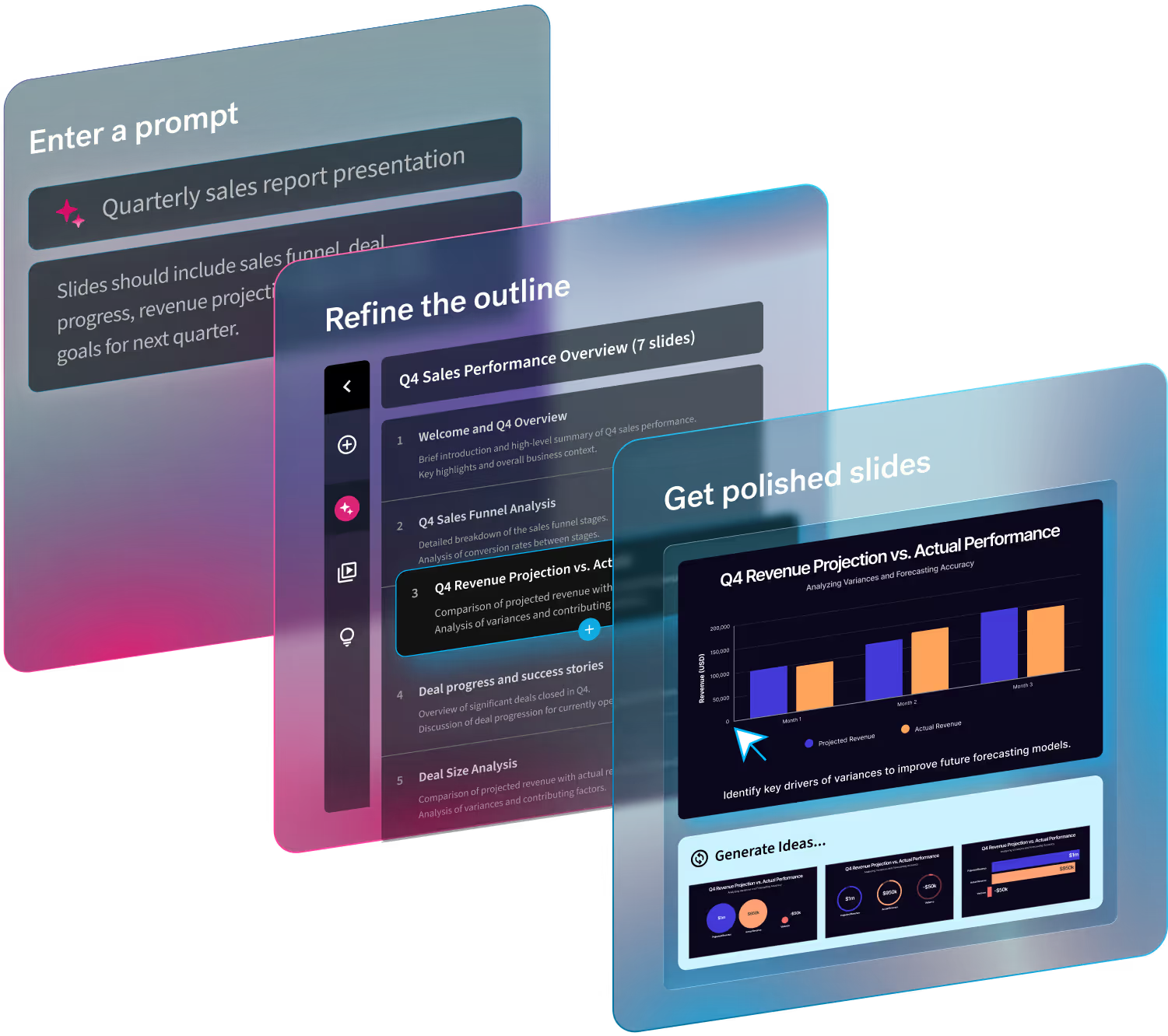
And with Beautiful.ai, building the right deck for the right moment doesn’t mean starting from scratch every time. It means having a smarter foundation that adapts as your audience—and your goals—change.




.avif)