



By Dan Visnick, Chief Marketing Officer, Beautiful.ai
In 2025, nearly every enterprise is embracing generative AI to move faster and be more efficient. Tools that generate copy, auto-adapt layouts, or spin up visuals promise speed at scale for creative workflows like presentations, sales enablement materials, and marketing assets. But here’s the catch: speed without brand control and consistency erodes trust.
When creativity is more accessible to every employee, maintaining consistent brand standards becomes harder than ever. Without tools that lock in your brand identity—colors, fonts, layouts, and approved assets—each AI-generated piece of content risks going off-brand.
This isn’t something to worry about in the future, it’s likely happening in your org today. Enterprise marketing leaders are already seeing brand consistency erode as AI adoption accelerates. CMOs are fielding new questions about governance, consistency, and credibility.
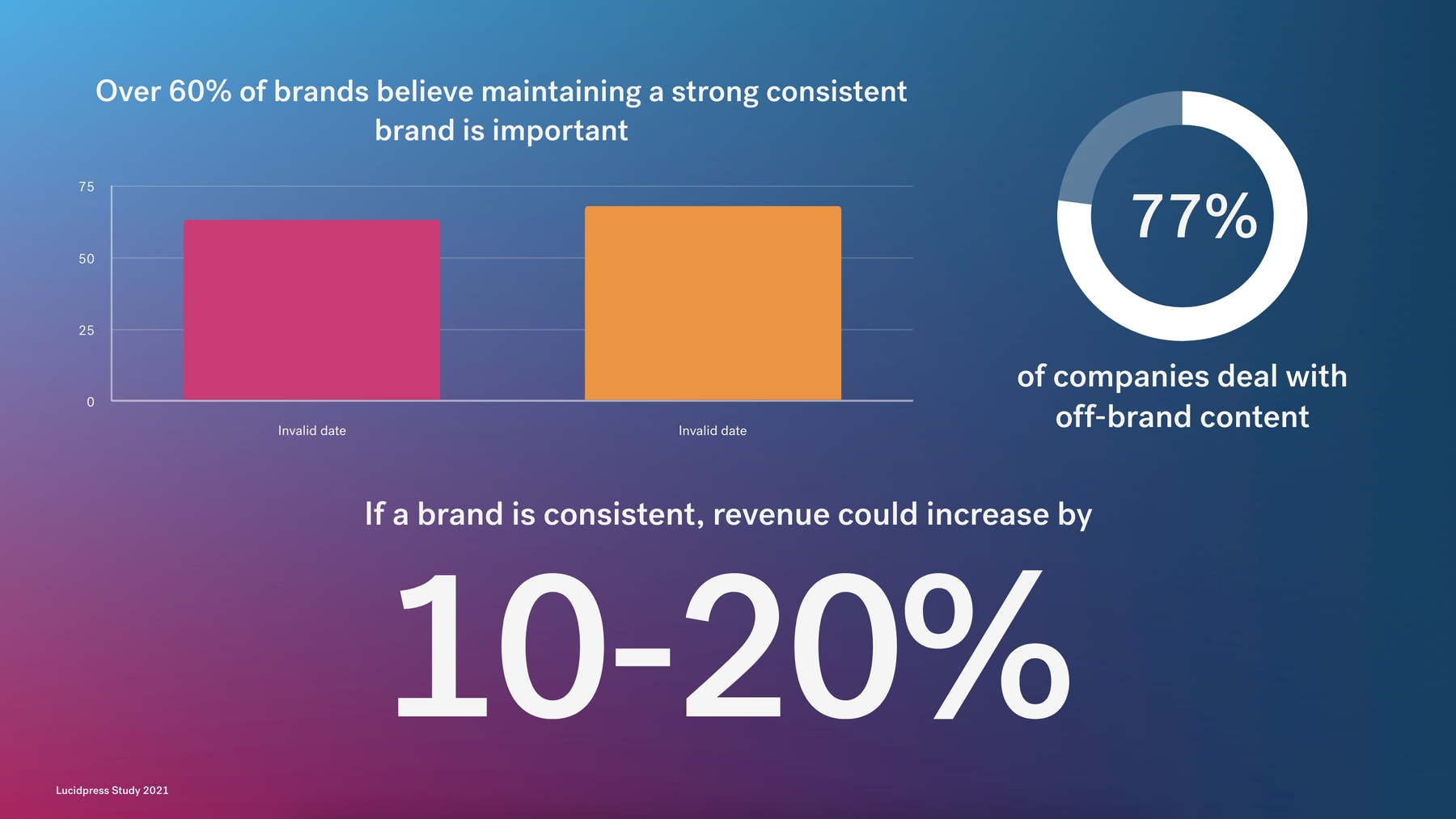
A Lucidpress study found that brand consistency can increase revenue by 10–20%, yet 77% of organizations admit they struggle with off-brand content. In the age of AI, inconsistency doesn’t just weaken design—it undermines enterprise performance.
The “AI drift” problem: smart tools, dumb mistakes
For years, brand consistency was a nice-to-have. Guidelines sat in PDFs; creative reviews caught most mistakes. But now, with AI democratizing content creation, control is evaporating. Sales teams, regional marketers, and operations leads are building content faster than ever. As a result, there’s unprecedented output followed by an unprecedented quality drift.
Even the smartest AI tools can make small mistakes: the wrong hex code, an outdated logo, a misaligned layout. We call this AI drift—a gradual erosion of brand identity that grows with every new deck, region, and department.
What once took months to create now happens in minutes. And when your visual identity starts to blur, customer trust follows.
What inconsistent branding is actually costing your team
The financial and operational impact of off-brand content is far-reaching.
1. Inconsistent branding across regions
When thousands of employees create decks daily, enforcing guidelines becomes impossible. Fonts, colors, and layouts vary across teams. Outdated materials linger after rebrands. Global campaigns lose cohesion as visuals and messaging diverge.
2. Unpolished presentations in high-stakes moments
In enterprise business, credibility is everything. Yet many sales, executive, and investor presentations fall short of boardroom-ready. When visuals feel off-brand or amateur, they can diminish the perceived value of your offering and lead to lost buy-in or sales
3. Inefficient workflows at scale
If every region is building decks differently, productivity suffers. Teams duplicate work, feedback loops bottleneck final sign-off, and high-value employees spend hours reformatting slides instead of driving strategy. Inconsistency becomes a hidden tax on innovation.
4. Collaboration and compliance challenges
Distributed teams often lack a single source of truth for approved content. Decks get scattered across emails, local drives, and shared folders, making it hard to maintain visibility and version control. This can lead to inconsistencies and extra effort to ensure materials meet internal and external standards.
5. Legacy tools that don’t scale
Traditional tools like PowerPoint and Google Slides weren’t designed to create consistent brand standards. Templates are rigid, brand rules are easy to override, and AI features often feel disconnected or risky to deploy. The result is a patchwork system that scales inefficiency, not consistency.
The solution: build brand structure first so you can prioritize consistency and speed later
The solution isn’t to slow down—it’s to build structure that enables speed. In an AI-driven world, enterprises need more than creative freedom; they need design intelligence. The key is to embed brand rules directly into the systems that power everyday creation.
That means every deck and asset begins with the brand baked in—colors, fonts, and layouts locked by design, not by policy. Teams should work from a centralized library of approved visuals and content, ensuring that no matter who creates or where they are, they’re building from the same foundation. Templates must be intelligent and adaptive, designed to flex to each use case without breaking brand standards.
As AI continues to evolve, brand protection must evolve with it. Guardrails powered by automation can now catch inconsistencies in real time—flagging off-brand content before it circulates, and ensuring every piece of communication reflects the organization’s true identity.
When structure and intelligence combine, consistency stops being a constraint and becomes a catalyst. Teams move faster, stay aligned, and spend less time fixing and more time innovating.
Consistency is the new growth strategy
Brand consistency isn’t a design preference, it’s a business imperative. As enterprises continue generating more content than ever, the only way to build brand equity at scale is through intelligent systems that enforce consistency automatically.
The CMOs who win in the age of AI won’t just move faster, they’ll move coherently. They’ll build guardrails that preserve identity, ensure compliance, and protect credibility, even as AI accelerates creation.
At Beautiful.ai, we believe the future of visual communication lies in design intelligence—technology that empowers every employee to create confidently within the brand, not outside it. With locked themes, shared asset libraries, and reusable templates, your team can work faster while your brand stays intact.
Organizations that realize this will scale creativity without sacrificing control.



.avif)
.avif)

.gif)
