

Small teams don’t lose deals because they lack ideas. More often, they lose time trying to package those ideas well.
A sales call gets moved up. A prospect asks for a deck. Someone opens a blank presentation and starts piecing together last quarter’s slides, a few new screenshots, and whatever visuals they can find before the meeting. The pitch may be strong, but the deck tells a different story: rushed, inconsistent, and not quite ready for the size of the opportunity.
Your pitch deck is an extension of your brand. When a major deal is on the line, prospects notice more than the product. They notice whether the story is clear, whether the slides feel credible, and whether your team looks prepared.
Most often the price, bad timing, lack of need, or a poor pitch will turn a customer away. But sometimes, even a client from the perfect demographic can still turn you down. Not always loudly or in a way that shows up in the post-call notes. Sometimes the weak link is sitting on your screen: seven bullets per slide, mismatched screenshots, crowded layouts, and a story that looks less buttoned-up than the business behind it.
Good decks can take hours, sometimes days, to perfect. When you’re running a small business, that time can’t be wasted. You might never get the feedback that your deck jeopardized the client’s trust. No one says, ‘Your deck made us nervous.’ They just stop replying.
Assuming the Deck is “Good Enough” Can Cost You
It’s easy to rationalize the cost of poor visual communication when you’re a small fish fighting for attention, or even survival, in a big pond. You can tell yourself the buyer will care more about the product than the polish. But “we're a small team, people understand” doesn’t cut it for prospects who are comparing you, consciously or not, to every other pitch and sales deck they’ve seen this week.
That comparison matters because buyers use every signal they can get. When two vendors make similar promises, the one that looks organized, clear, and prepared often feels like the safer bet. Your deck may not be the only reason a deal moves forward, but it can absolutely become one more reason a buyer hesitates.
The fix isn’t hiring a designer for every sales conversation. Most SMBs don’t have that luxury anyway. The better answer is removing the design bottleneck altogether. When your presentation software handles layout, alignment, and visual consistency for you, your team can stop sending decks that feel patched together and start shipping ones that are polished enough to build confidence of investors and customers alike.
It’s not just the time you save using tools like this, it could be the difference between being taken seriously or not.
The Damage Goes Beyond the Financial
The tricky part is that a bad deck rarely gets blamed directly. It doesn’t show up in your CRM as “lost due to poor formatting,” and prospects usually won’t tell you your slides made them question your credibility. Instead, the cost gets buried across your pipeline, your calendar, and your brand perception.
Lost revenue is the most obvious cost. For a small business, one missed deal can change the month. But the bigger risk is the pattern. If your close rate slips because your pitch materials aren’t building confidence, that gap compounds over a quarter, a year, or an entire sales cycle. The hours spent building the deck are only part of the cost. The real loss is the opportunity it failed to convert.
There’s almost the time cost. Beautiful.ai’s productivity survey found that up to 60% of professionals spend an average of 4+ hours a day working on decks. For a smaller business, that could mean someone on your team (who is probably already wearing three other hats) spent a weeknight rearranging bullet points and resizing images. Time is expensive. The bigger frustration is that the finished deck still may not reflect the quality of the business.
Beautiful.ai users regain an average of 5.6 hours per week when traditional slide formatting is no longer slowing them down, which translates to roughly $20K in annual productivity per person. When your team isn’t worrying about the time and resources it takes to build decks, that money doesn’t need to disappear.
The Impression Your Deck Leaves Impacts your Reputation
In modern B2B sales, your deck often enters the room before you do. It gets forwarded to a decision-maker you’ve never met, dropped into a Slack channel, or skimmed after the call by someone who wasn’t even there to hear your best points. By the time you join the next call, someone you have never met may already have decided whether your business feels credible.
Your deck is more than a visual aid. It signals whether you take your own business seriously. If it’s polished and easy to follow, that discipline reflects back on the business. If it looks dated or thrown together, buyers may assume the same about the way you operate. That may not be fair, but it is how perception works in a crowded sales process.
As a smaller business, a dedicated presentation designer might not be in the budget. But to make a polished deck, you don't need one. AI-powered tools take the onus off small businesses to perfect their decks. Rather than onboarding a contractor or agency and paying high hourly rates, subscription-based platforms enable you to make the same caliber of slides, for a fraction of the price.
Work Faster and Stay on Brand with AI-Powered Slides
So much of the business rides on too few decks. The challenge is that most SMBs don’t have the time, budget, or headcount to bring in a designer for every business critical presentation. But that doesn’t mean every pitch has to start from a blank slide and end with someone manually nudging text boxes at midnight.
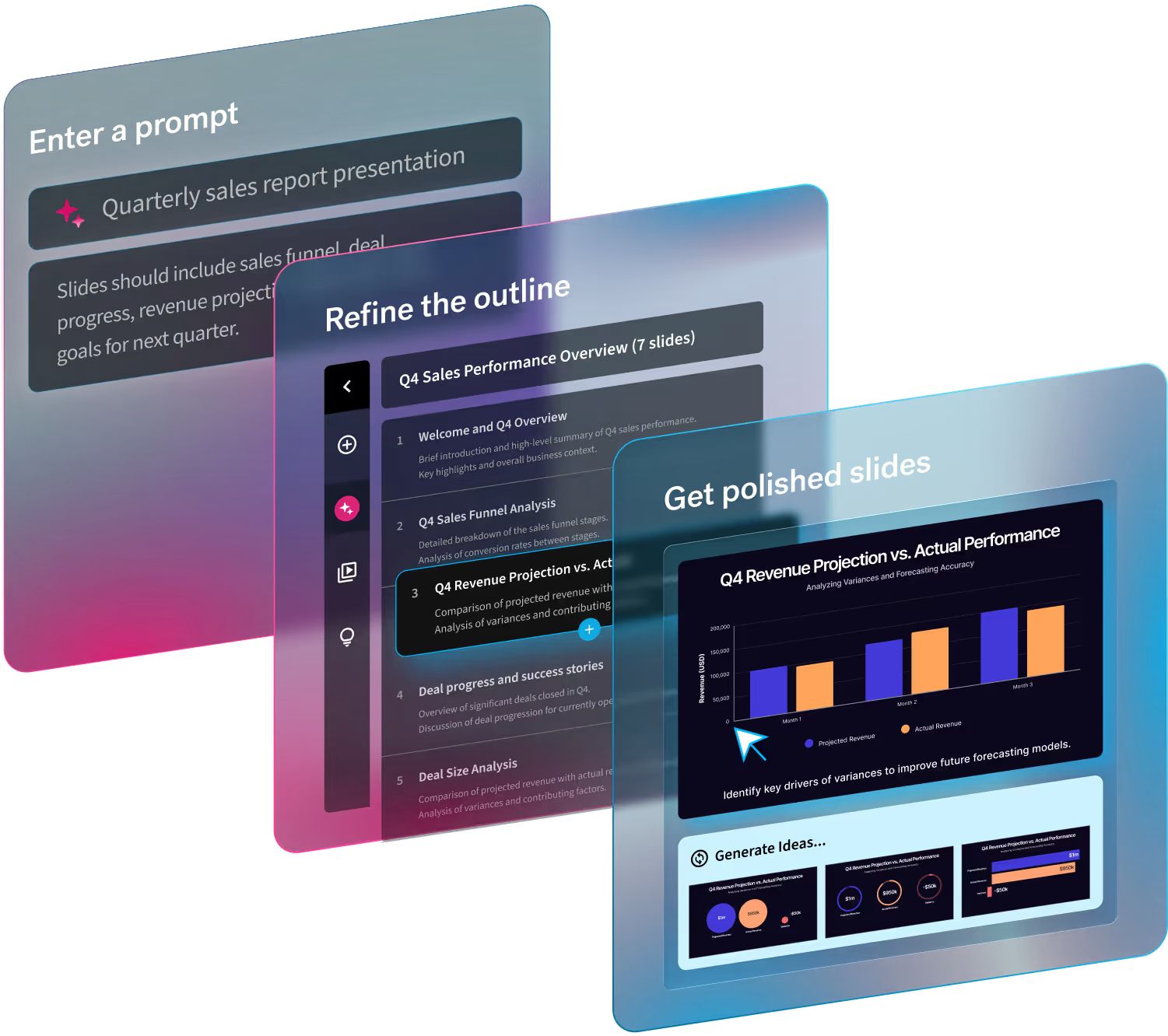
Beautiful.ai gives small teams a faster starting point with 100+ templates built for common business needs. And when a template isn’t exactly right, Smart Slides help keep the deck structured as you work. Layouts stay aligned, spacing adjusts automatically, and the presentation stays visually consistent without someone manually fixing every slide. When you can trust your slides to tell a professional story, you don’t have to worry about presentation overshadowing the strength of your pitch. Brand controls also help make sure every deck looks like it came from the same company, whether it was built by sales, marketing, leadership, or customer success.
The result is simple: Your team spends less time fixing slides and more time tightening the story. No more “Tuesday night” decks that still don’t feel quite right.
When every deal matters, your deck should make the buyer feel more confident, not less. See how small teams use Beautiful.ai to build polished, consistent presentations without adding design work to the calendar.

.avif)

.avif)
.gif)