
Great decks take structure, not endless hours
Most teams still treat deck creation like a long, manual process: outline the story, pull the data, fix the formatting, adjust the branding, and polish up until the meeting starts. That workflow made sense when presentation tools were mostly blank canvases. It makes less sense now.
A strong deck still needs clear thinking and a real point of view. This can be achieved without spending hours (or even days) formatting.. The real issue is rarely time itself. It’s the absence of a repeatable process.
That’s where the 30-minute deck comes in: a useful, well-structured, visually polished presentation built in half an hour or less. You can do this without cutting corners by designing a workflow that removes friction. But how?
With AI, smart templates, and shared systems, teams can move faster without sacrificing quality. The standard for speed keeps you from rebuilding the same process from scratch each time.
Blank slides create bottlenecks
Getting started is often the hardest part of any project. A blank title slide looks simple, but it creates too many decisions at once: What is the story? What format should they follow? Where does the data go? How should this look?
That’s where time disappears.
The problem isn’t a lack of hours in a day. It’s that every deck becomes a new invention. People recreate structures, rewrite familiar messaging, hunt for old slides, and manually format layouts that already existed somewhere else.
A better workflow starts with a system. Before anyone opens a presentation, they should know the basic path: define the goal, outline the story, build from reusable components, then refine. AI can help generate structure and messaging, but the bigger unlock is repeatability. When teams use the same process each time, the work gets faster and the output gets more consistent.
A good deck prioritizes clarity over curb appeal
It is easy to overvalue polish. Custom graphics and hyper-designed layouts can look impressive, but they don’t always make a presentation more effective.
A good deck values three key elements: clarity, structure, and relevance. The content makes sense, the ideas are formatted consistently and logically, and it matches what the audience needs to know or decide. That’s the bar for a 30-minute deck.
Speed also creates room for better thinking. When the first draft comes together quickly, teams can spend the remaining time improving the message, pressure-testing the story, and preparing to present.
Design still has an important role to play. But it should support the message rather than consuming your process. A deck that arrives on time, explains the idea clearly, and gives the audience a decision path is more valuable than a late deck that has been over-polished into perfection.
A repeatable workflow turns speed into a habit
A 30-minute deck is only realistic when the process is structured. Without a workflow, half an hour disappears fast.
Here’s a practical breakdown.
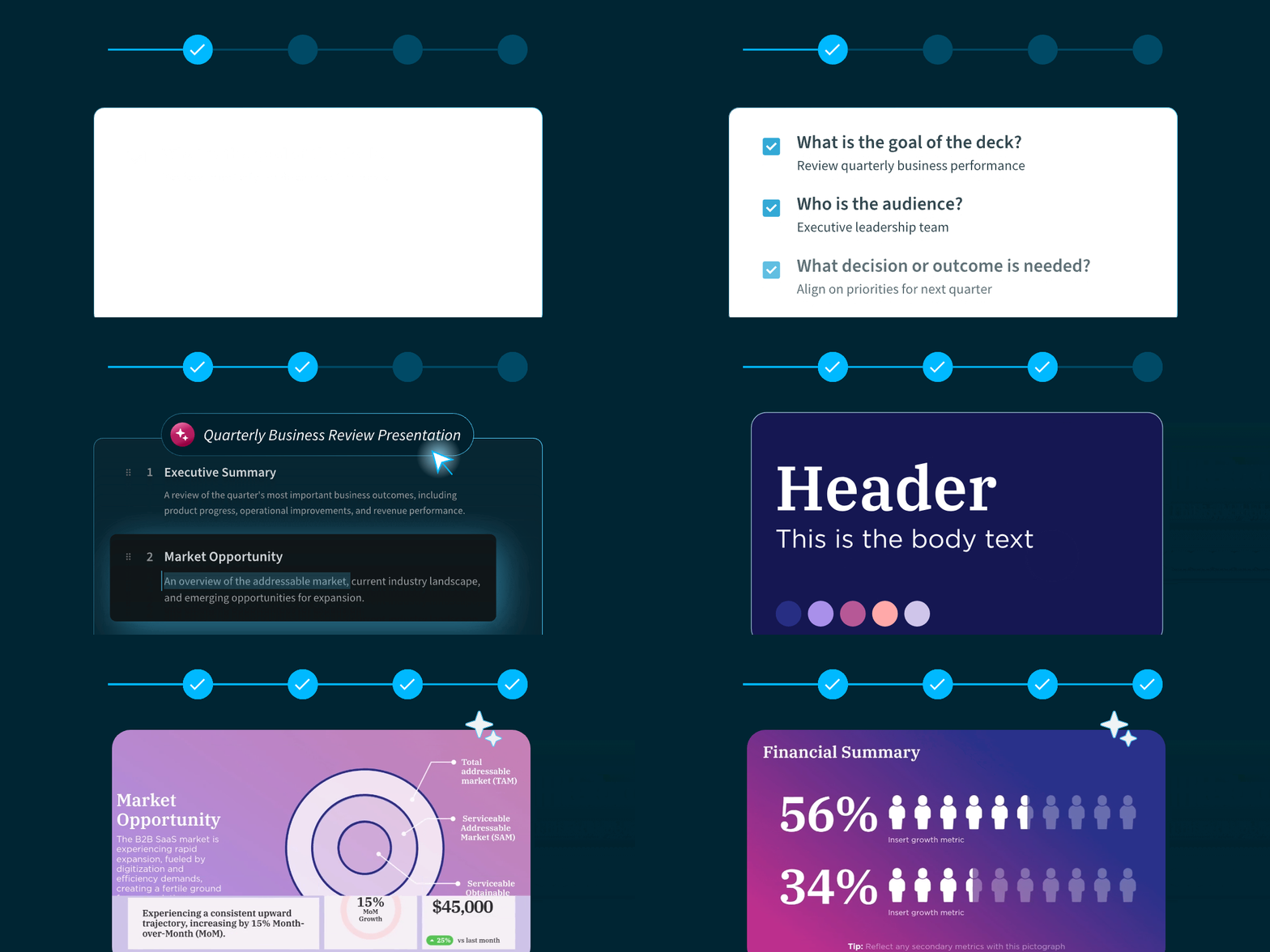
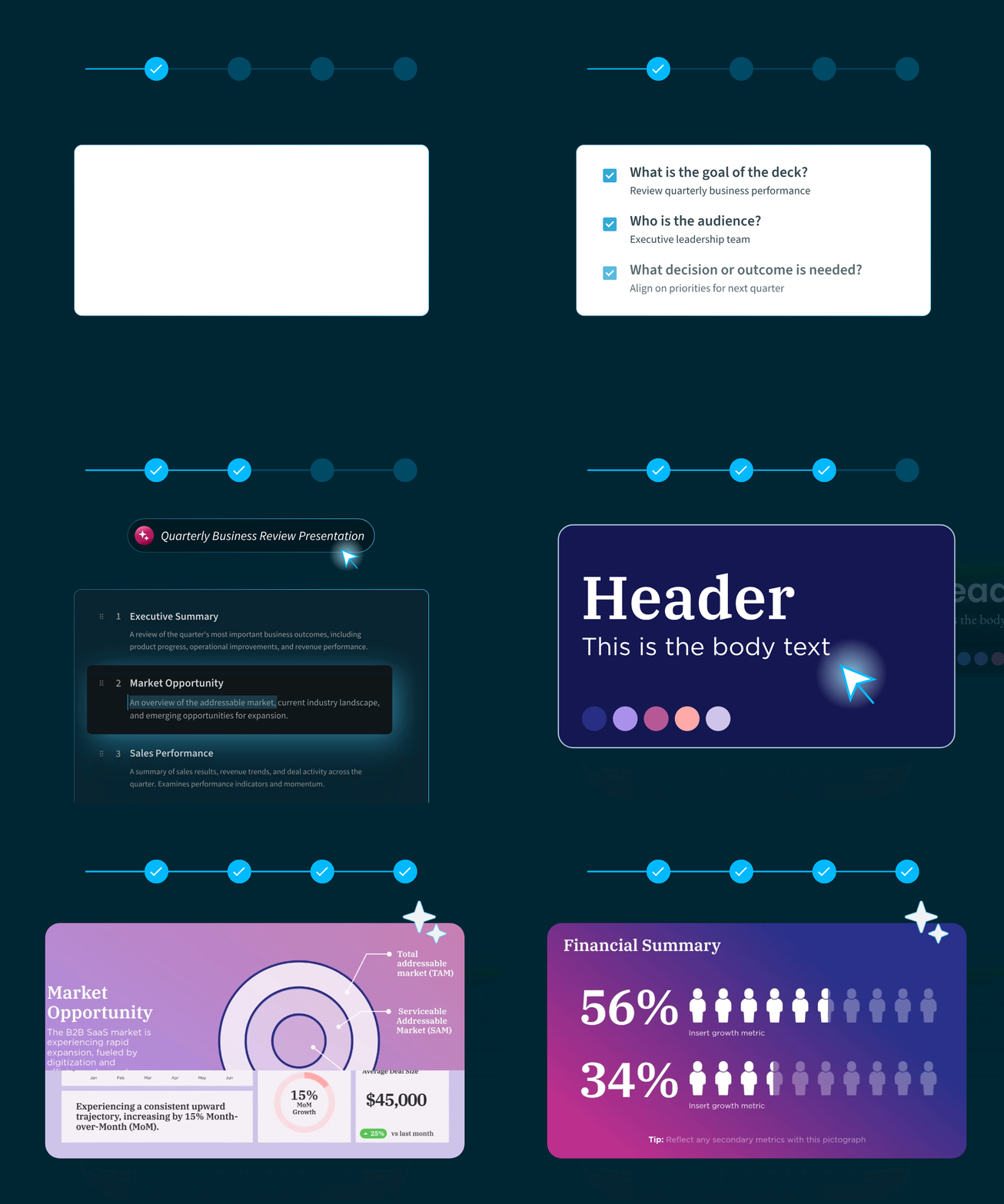
- Minutes 0–5: Define the Objective
- What is the goal of the deck?
- Who is the audience?
- What decision or outcome is needed?
- Minutes 5–15: Generate the Structure (with AI)
- Outline key sections
- Draft slide headlines
- Create a logical flow
- Minutes 15–25: Build and Populate Slides
- Use templates and pre-built modules
- Insert content (AI-assisted where helpful)
- Focus on clarity over perfection
- Minutes 25–30: Refine and Finalize
- Tighten messaging
- Remove unnecessary content
- Quick polish for readability
AI is most useful when it has a job to do
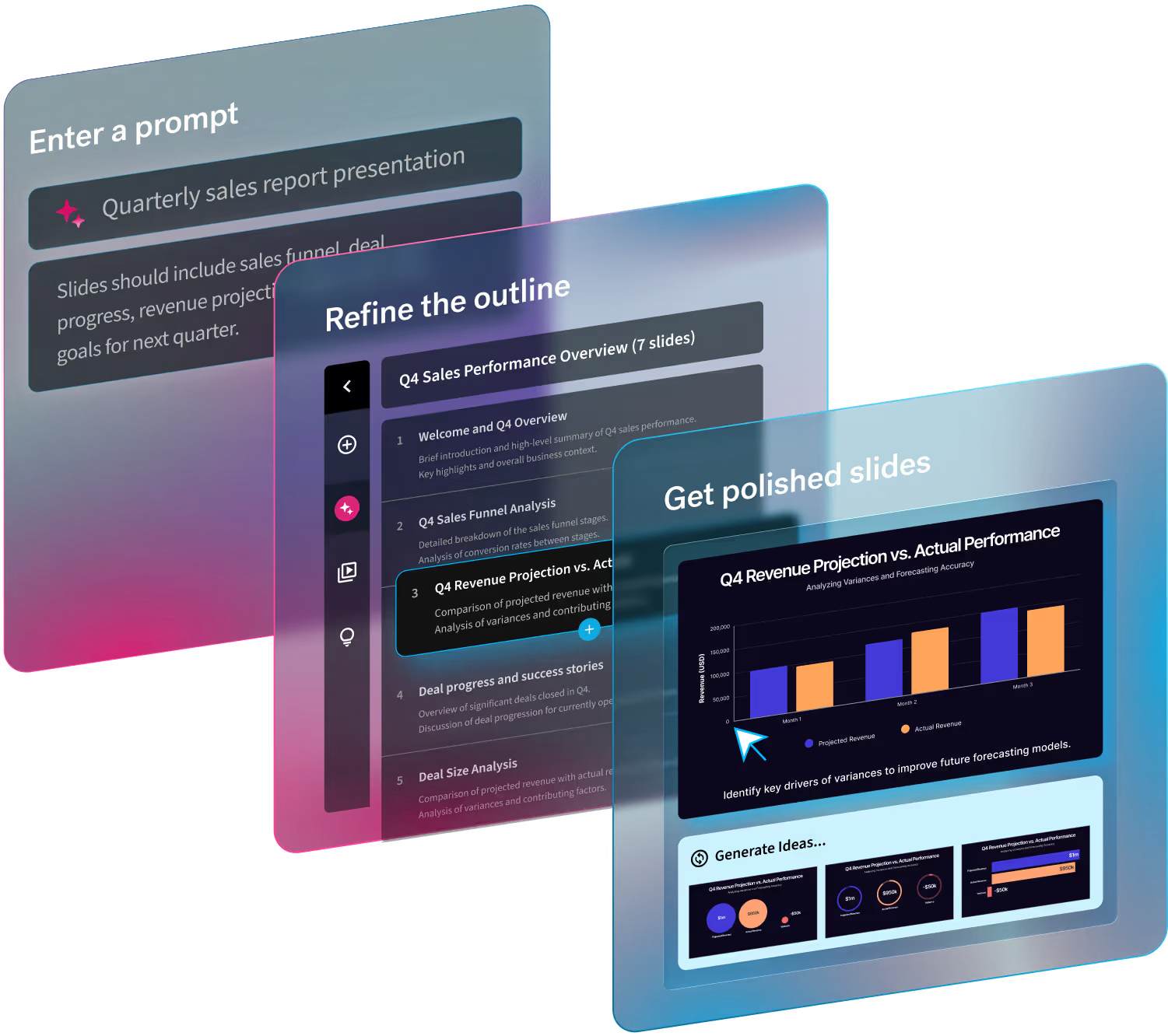
AI works best when it is given direction. Use AI to turn notes, briefs, documents, or rough ideas into an outline. Ask it to draft slide headlines, summarize research, rewrite dense copy, or identify the strongest takeaways from a dataset.
If a deck includes numbers, AI can help surface the story behind the metrics instead of forcing someone to manually scan three reports for the point.
But AI should be accelerating the work inside the system, not replacing it entirely.
The teams that get the best results are not starting from scratch with a deck, nor AI. They know what kind of input they need, what kind of output they expect, and how they will refine the result. That repeatability is what keeps AI from producing generic slides and turns it into a practical workflow tool.
Systems remove the small decisions that slow teams down
The most efficient teams are not faster because they rush. They are faster because they make fewer unnecessary decisions.
Pre-built slide libraries help teams avoid recreating the same content over and over. Org charts, customer logos, quarterly metrics, and approved messaging can all live in a shared library. In Beautiful.ai, Team Slides make those assets easy to insert and update, so teams are not copying outdated slides from someone else’s deck.
Standard messaging frameworks help too. A sales deck, board update, campaign recap, or project kickoff should not require a brand-new narrative structure every time. Teams can define reusable story patterns and adapt them by audience with templates.
Design systems are the final layer. Fonts, colors, logos, and layouts should not depend on who built the deck. Beautiful.ai’s Brand Kits and Smart Slides help keep presentations on brand automatically, so non-designers can create polished work without memorizing hex codes.
Faster decks preserve business momentum
Saving time is the obvious benefit of a 30-minute deck, but it’s far from the only one.
Fast deck creation changes how teams operate. Updates happen sooner. Sales teams respond faster. Managers share clearer context. Stakeholders get the information they need while the decision is still relevant.
Speed also reduces the procrastination that comes with big, messy presentation projects. When a team trusts the workflow, starting a deck feels less daunting. That encourages more iteration and better final thinking.
Beautiful.ai’s productivity research supports this shift: surveyed users reported saving a median of three hours per week, with frequent creators saving an average of two hours per presentation. Those gains matter because they move time away from formatting and back toward strategy, communication, and decision-making.
The workflow only functions if the team shares it
A 30-minute deck should not be a solo productivity hack. It should become a team habit. That starts with standardizing the workflow.
Define what information should be included upfront, which templates to use, and how review should happen. Then document prompt examples, preferred structures, and reusable slides so everyone has the same starting point.
Training matters here. If people do not understand how to use AI, templates, or shared libraries, they will default back to old habits. A short enablement session can save hours later by showing the team how to start with structure instead of a blank slide.
Some decks deserve more than 30 minutes
Not every presentation can or should be finished in half an hour. A high-stakes investor pitch, board presentation, or major customer proposal may require deeper research and more review.
But this doesn’t make the 30-minute model less useful.
The point is to make 30 minutes the baseline, not the limit. Even complex decks benefit from the same workflow: define the objective, generate the structure, build from reusable systems, and refine intentionally. The first draft can still happen quickly, leaving more time for feedback and delivery.
A 30-minute deck is not about pretending every presentation is simple. It is about refusing to waste hours on the parts that should already be systematized.
The new standard is less friction, not lower quality
The teams that move fastest do not create better presentations by rushing. They create better presentations by removing friction.
These teams know the goal before they build, use AI to get unstuck, rely on templates and shared libraries instead of rebuilding familiar slides, and let design systems handle formatting so people can focus on the message.
That is the real promise of the 30-minute deck. It gives teams a new expectation for how quickly good communication can happen.
The next time a deck request lands on your calendar, do not start by asking, “How many hours will this take?” Begin by asking, “What system can get us to a clear first draft fastest?”
Beautiful.ai helps teams create polished, on-brand presentations in minutes with AI-powered workflows, Smart Slides, shared libraries, and built-in design guardrails. Try Beautiful.ai to build your next deck faster, without starting from scratch.

.avif)

.avif)
.gif)
.gif)